Your Forearms Are Sandbagging Your Deadlift — Here's the Fix
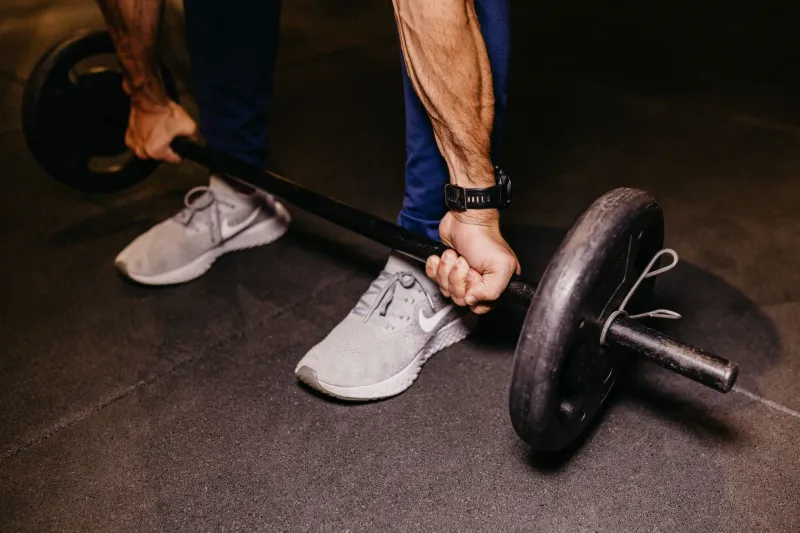
Picture this: you step up to the bar, you've been eating right, sleeping decent, and you've put in the work. You set your hips, brace your core, pull — and the bar starts slipping before your hamstrings even get to do their thing. Frustrating doesn't cover it.
Here's the thing most gym bros won't admit: the culprit usually isn't your back, your hips, or even your programming. It's your grip. Specifically, your forearms are quitting the job early and dragging the rest of your lifts down with them.
Let's talk about why that happens and — more importantly — what you can actually do about it.
The Grip Strength Myth That's Holding You Back
There's a persistent idea floating around that grip strength is a minor detail — something only rock climbers and arm wrestlers need to worry about. Strap on some lifting straps and move on, right?
Wrong. That mindset is costing you real gains.
Your grip is the first point of contact between you and every single piece of equipment in the gym. Barbells, dumbbells, cable attachments, pull-up bars — all of it runs through your hands first. When your forearms fatigue before your target muscle group does, you're cutting the set short. You're leaving reps in the tank that your lats, traps, and posterior chain were fully capable of completing. Over months and years, that adds up to a massive amount of wasted potential.
Research published in the Journal of Strength and Conditioning Research has consistently shown that grip endurance is a meaningful predictor of overall upper body pulling performance. Translation: if your grip is weak, your numbers across the board — deadlifts, bent-over rows, farmer's carries, pull-ups — are all artificially deflated.
Why Your Forearms Fatigue So Fast
The forearm flexors and extensors are relatively small muscle groups. They're also chronically undertrained by most lifters who rely on compound movements alone to develop them. Unlike your quads or chest, which get dedicated training time and a mountain of exercises, forearms tend to get whatever scraps are left over from your main lifts.
Add to that the fact that most people default to straps the moment things get uncomfortable, and you've got a recipe for grip weakness becoming a permanent ceiling on your performance.
Straps have their place — heavy accessory work, max effort days, when you're genuinely trying to isolate a muscle group and don't want grip to be the variable. But if you're strapping up every single set, every single session, you're essentially putting your forearms in a cast and wondering why they never get stronger.
The Exercises That Actually Build Grip That Lasts
Here's a no-fluff breakdown of the accessory work that'll actually move the needle.
Dead Hangs
Simple, brutal, effective. Hang from a pull-up bar with a double overhand grip and hold on as long as you can. Aim for 3 sets to near-failure, two to three times a week. Dead hangs train the grip in the exact position it fails during a deadlift — fully loaded, fully extended, fighting to hold on. Start with 20–30 seconds and build from there.
Farmer's Carries
If there's one exercise that will transform your grip faster than almost anything else, it's the farmer's carry. Grab a pair of heavy dumbbells or trap bar handles, stand tall, and walk. The loaded carry builds grip endurance under real-world stress — the kind your forearms face at the end of a heavy deadlift set when you're trying to grind out that last rep.
Start with 3 sets of 40–50 feet. Load them heavy enough that your grip is the limiting factor, not your legs.
Plate Pinches
Grab two weight plates, smooth side out, and pinch them between your fingers and thumb. Hold for time. This one targets the thumb and finger flexors in a way that most grip training misses, which translates directly to a stronger barbell grip.
Towel Pull-Ups
Throw a gym towel over a pull-up bar and grip each end. Now do your pull-ups. The unstable, thick surface of the towel forces your forearms to work overtime to maintain control. Even a couple sets of these per week will build serious grip durability.
Wrist Roller
Old school, but it works. A wrist roller targets the extensors and flexors through a full range of motion under load. If your gym has one, use it. If not, you can DIY one with a dowel rod and some rope for under ten bucks.
How to Program This Without Burning Out
You don't need a separate grip day. Tacking on dedicated forearm work two to three times a week is plenty, and you can fold it into your existing sessions without adding much time.
Here's a simple weekly structure to get you started:
Pull Day (Deadlift Focus):
- Pull without straps on your working sets up to your top set
- 3 sets of dead hangs after your main lifts
- 3 sets of farmer's carries as a finisher
Upper Body Day:
- 3 sets of plate pinches
- 2 sets of towel pull-ups
Optional Third Session:
- Wrist roller, 3 sets each direction
Give this six to eight weeks before you judge it. Grip strength adapts slower than bigger muscle groups — it's connective tissue-heavy work. But when it catches up, you'll notice your deadlift numbers moving again almost immediately, because the limiter is finally out of the way.
One More Thing: Train Barehand More Often
Beyond programming, the single biggest change most lifters can make is simply using straps less. Leave them in your bag on lighter sessions. Grip the bar harder on warm-up sets. Let your hands work.
Your body adapts to the demands you put on it. If you never make your grip work, it never gets stronger. It's that straightforward.
The guys with vise-grip handshakes and forearms that look like they were carved out of oak didn't get there by accident. They trained their grip like it mattered — because it does.
Don't let something as fixable as forearm strength be the thing standing between you and the numbers you're capable of pulling. Put in the work, ditch the straps more often, and watch what happens.