Your Spotter Is Doing Your Reps — And That's Why You're Still Stuck
The Lift That Wasn't Really Yours
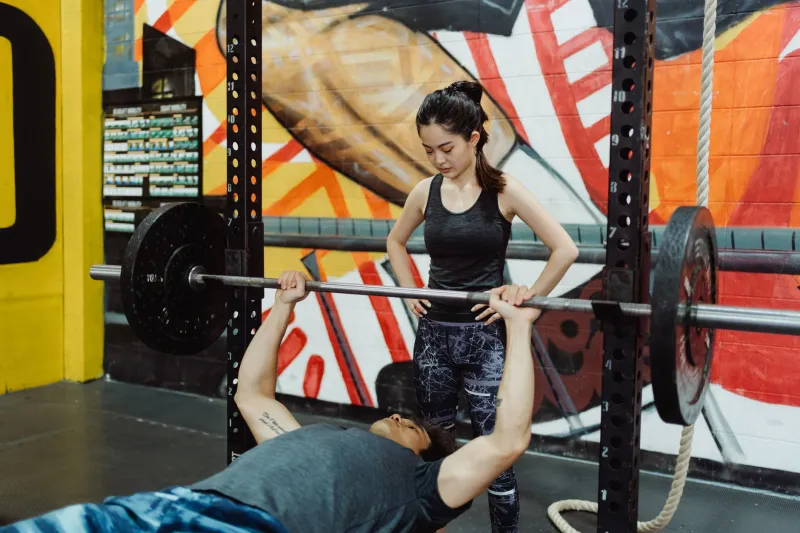
Picture this: you're three reps into a heavy bench set, the bar slows down somewhere around your chest, and your buddy's hands come flying in like he's trying to catch a falling baby. You grind it out — or at least it feels that way — rack the bar, and nod like you just conquered something. But did you?
Here's the uncomfortable truth most gym bros don't want to hear: if your spotter is pulling more than a few pounds of upward pressure during a "your" rep, that rep belongs to him more than it does to you. And the longer you keep letting that happen, the longer you stay stuck at the same real-world strength level while your ego floats somewhere above it.
Spotting is one of the most misunderstood tools in the gym. Done right, it's a safety net and a confidence booster. Done wrong, it becomes a performance costume — something you wear to look stronger than you actually are.
Why We Let It Happen
There's some real psychology behind why lifters accept too much help, and it starts with ego. Nobody walks into the gym wanting to strip plates off the bar. We've all got that mental image of what we should be lifting, and falling short of it stings in a very public way.
So when the bar stalls and a spotter takes over, most guys don't say "hey, back off." They push harder, the spotter pulls harder, and somehow the rep gets finished. Both parties walk away feeling good about it. The lifter thinks he's getting stronger. The spotter thinks he's being helpful. The weak point that caused the stall? Still there. Still untrained. Still quietly capping your progress.
There's also a social element. Gym partnerships are built on loyalty and mutual support, and telling your training partner "you're helping too much" can feel like a personal dig. It's awkward. So lifters stay quiet, keep loading the bar, and keep letting their buddy unknowingly sandbag their development.
The Physiology of the Fake Rep
Your nervous system is brutally honest, even when you aren't. When a spotter assists a rep, the load distributed through your muscles drops — sometimes dramatically. The sticking point you hit on a bench press, usually around the lower third of the movement, exists because that's where your anterior deltoids and triceps are at their weakest mechanical advantage. That's the zone that needs the stress to grow stronger.
When a spotter bridges that gap for you, those muscles never get the overload signal they need. You're essentially skipping the most valuable part of the rep. Over weeks and months, this creates a bizarre situation where you can theoretically "lift" more weight in the gym with your spotter present than you could ever actually move on your own. Your gym numbers go up. Your actual strength flatlines.
Partial reps disguised as full lifts are even sneakier. A spotter who guides the bar through a shortened range of motion while you apply pressure gives your brain the sensation of completing a full lift. You feel the exertion. You feel the struggle. But the neuromuscular adaptation — the thing that actually makes you stronger — requires you completing the full range under load. There's no shortcut the body will accept.
How to Tell the Difference: Helper vs. Enabler
Not all spotting is bad. A good spotter is invaluable for pushing past mental barriers on max-effort sets, staying safe during heavy singles, and learning to trust yourself under heavy loads. The key is knowing what kind of spotting you're actually getting.
A helper:
- Keeps hands close but doesn't touch unless you actually fail
- Lets you grind through a slow, ugly rep without intervening
- Only assists enough to keep the bar moving, not to complete the rep for you
- Gives verbal cues instead of physical ones first
An enabler:
- Touches the bar the moment it slows down, even slightly
- Adds constant upward pressure throughout the rep "just in case"
- Counts reps that were clearly assisted as full reps
- Encourages you to keep loading weight after a set that required significant help
If your spotter's knuckles are white before you've even hit your sticking point, that's a red flag. If you're consistently hitting rep PRs on days when a certain training partner is around — but can't replicate those numbers alone — that's an even bigger one.
Training Strategies That Actually Build Real Strength
The fix isn't to ditch your training partner. It's to restructure how you use them.
Use paused reps at your sticking point. If your bench stalls at the bottom, pause there for a full second on every rep. You can't fake that. You can't be spotted through it. Either your muscles fire or the bar doesn't move.
Train to technical failure, not spotter-assisted failure. The last rep you can complete with solid form — without help — is your true working max. Use that as your baseline, not whatever number you can hit with two extra hands on the bar.
Try solo lifting sessions regularly. Not every session needs a spotter. Training alone forces you to be honest about your actual capacity. Use a power rack with safety bars and learn what you can really do. It's humbling, but it's the kind of humbling that leads somewhere.
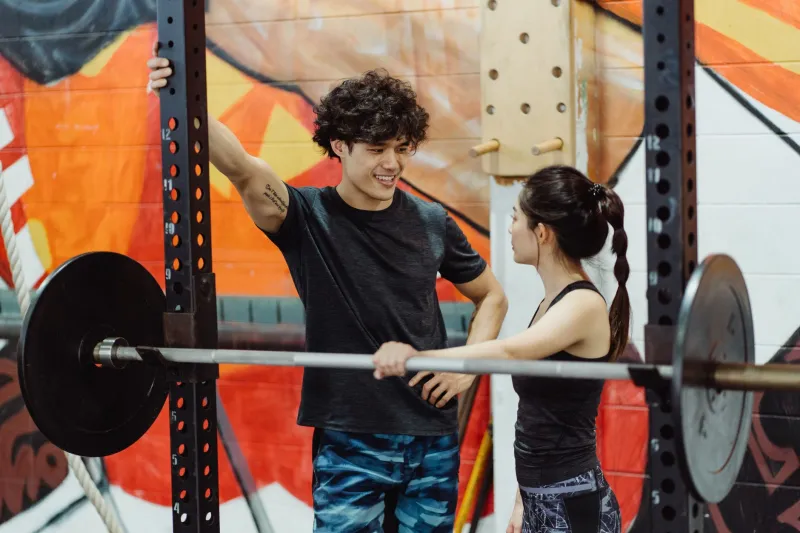
Communicate with your spotter directly. Tell them exactly what you need before the set. "Hands off unless I miss the lockout" is a complete sentence. A good training partner will respect that. A great one will thank you for it, because it makes them a better spotter too.
Use accommodating resistance. Bands and chains load the top portion of a lift where spotters typically intervene least and your muscles are strongest. They also make partial-rep cheating much harder to disguise, because the resistance profile is unforgiving.
Ego Is the Enemy of the Actual Gains
Here's the thing about ego lifting: it feels productive in the moment. The weight goes up, your partner cheers, you chalk it up as progress. But the gym doesn't care about your feelings. It responds to actual mechanical stress placed on actual muscle fibers by you, not by a cooperative effort between you and your buddy.
Real strength — the kind that carries over outside the gym, the kind that doesn't evaporate when your spotter calls in sick — gets built in the reps you grind out alone. In the sticking points you push through without help. In the honest sets where the bar tells you exactly what you've got and you respond accordingly.
Your training partner is a resource. Use them well. But the bar? That relationship is between you and it. Keep it that way.