Why Intermediate Lifters Stop Growing — And the Programming Fixes That Actually Work
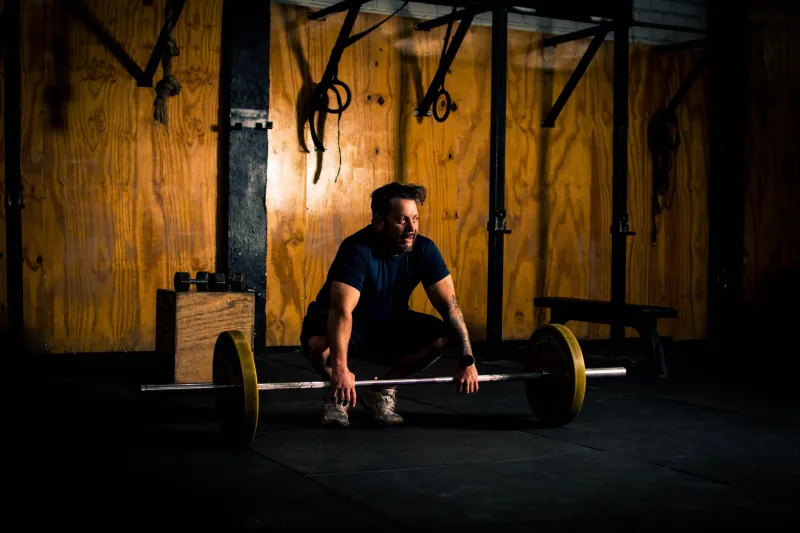
You were making progress every single week. New PRs, shirts getting tighter in the right places, the gym feeling like your second home. Then one day — nothing. The bar doesn't move any heavier. The mirror looks the same. You're grinding just to stay where you are.
Welcome to the intermediate plateau. It's one of the most frustrating phases in a lifter's career, and it happens to almost everyone who sticks with training long enough to get there. But here's the thing: it's not a dead end. It's a signal. Your body is telling you it's adapted — and that means it's time to change the conversation.
Why Your Body Stops Playing Along
When you first started lifting, everything was a stimulus. Your nervous system was learning to recruit muscle fibers more efficiently, your connective tissue was toughening up, and your muscles were responding to just about any stress you threw at them. That's called the novice adaptation effect, and it's why beginners can make gains on almost any half-decent program.
But your body is ruthlessly efficient. It doesn't want to carry more muscle than it needs — muscle is metabolically expensive. So as you accumulate training experience, the threshold for what counts as a meaningful stimulus gets higher. The same sets, reps, and weights that used to drive adaptation now just maintain the status quo.
From a physiological standpoint, this comes down to a few key mechanisms:
- Reduced anabolic sensitivity: Your muscle cells become less responsive to training-induced signals like mTOR activation and muscle protein synthesis.
- Neural efficiency plateaus: The easy neurological gains you made early on are largely cashed in. Further strength improvements require more deliberate stress.
- Recovery demands increase: As you lift heavier, systemic fatigue accumulates faster, meaning you can't just add volume indefinitely without paying a price.
None of this means you're stuck. It means your programming needs to evolve.
Periodization: Stop Winging It
If you've been running the same three-day full-body routine for a year or doing whatever you feel like on a given Tuesday, that's likely a big part of the problem. Periodization — the planned variation of training stress over time — is how serious strength athletes avoid the adaptation trap.
There are a few flavors worth understanding:
Linear periodization is the simplest: you gradually increase weight or volume over a set time block, then deload and reset at a higher baseline. Great for getting back on track if you've been training randomly.
Undulating periodization rotates intensity and volume more frequently — sometimes week to week (weekly undulating) or even session to session (daily undulating, or DUP). Research published in the Journal of Strength and Conditioning Research has shown DUP approaches to produce superior strength gains in trained individuals compared to linear models over the same time period. The constant variation keeps your neuromuscular system from fully adapting to any single stimulus.
Block periodization, favored by many powerlifters and Olympic weightlifters, organizes training into distinct phases — hypertrophy, strength, and peaking — each building on the last. It's a longer-term commitment but produces serious results for intermediate-to-advanced athletes.
The key takeaway: structure matters. Pick a model, commit to it for 8–16 weeks, and track your numbers.
Autoregulation: Training Smarter, Not Just Harder
One of the biggest mistakes plateaued lifters make is treating every session like a max-effort event. Some days your nervous system is dialed in; other days you slept five hours and ate gas station sushi for lunch. Rigid programming doesn't account for this — autoregulation does.
Autoregulation means adjusting your training load based on how you're actually performing that day, rather than what a spreadsheet says you should lift. The most practical tool for this is RPE (Rate of Perceived Exertion), typically scaled from 1–10, where RPE 8 means you could've done two more reps and RPE 10 is a true max effort.
By training within RPE ranges rather than fixed percentages, you push hard on your best days and back off intelligently when recovery is compromised. Research from Dr. Mike Zourdos and colleagues has validated RPE-based programming as a reliable way to manage fatigue and sustain long-term progress in strength athletes.
Practical tip: if your warm-up sets feel unusually heavy, take that as data. Drop the planned working weight by 5–10% and focus on quality movement. You'll recover faster and come back stronger.
Intensity Techniques That Break Adaptation
Beyond periodization structure, specific intensity techniques can jolt a stagnant program back to life — when used strategically, not every session.
Cluster sets: Instead of grinding through 5 straight reps, you break the set into mini-clusters (e.g., 2+2+1) with 10–20 seconds of rest between clusters. This lets you maintain bar speed and technique with near-maximal loads, producing a potent strength stimulus without the same level of fatigue as a traditional set.
Paused reps: Adding a 2–3 second pause at the bottom of a squat, bench, or deadlock position eliminates the stretch-shortening reflex and forces your muscles to work from a dead stop. It's humbling and highly effective for breaking through sticking points.
Top sets and back-off sets: Hit one heavy top set near your max (RPE 8–9), then drop 10–15% and perform 2–3 back-off sets for volume. This approach threads the needle between intensity and volume without destroying your recovery.
Accommodating resistance: Bands and chains aren't just for powerlifting meets. Adding variable resistance teaches you to accelerate through the entire range of motion and builds strength at your lockout — a common weak point for intermediate lifters.
The Deload You Keep Skipping
Let's be honest: most lifters skip deloads because they feel like wasted time. That's backwards thinking. A properly timed deload — a week of reduced volume and intensity, roughly every 4–8 weeks depending on your training age and stress load — allows accumulated fatigue to dissipate and lets your actual fitness surface.
Think of it this way: fitness and fatigue both accumulate during a hard training block. Fatigue masks fitness. The deload removes the mask. More than a few lifters have come back from a deload week to hit a PR they didn't see coming.
The Bottom Line
Plateaus aren't a sign you've maxed out your potential. They're a sign your body has caught up to your programming — and your programming needs to level up. Introduce periodization structure, use autoregulation to train with intent rather than ego, deploy intensity techniques selectively, and respect your recovery.
The lifters who keep progressing for years aren't just grinding harder than everyone else. They're training smarter. And that's something you can start doing today.