Big Lifts, Big Results: Why Your Machine Circuit Is Keeping You Small

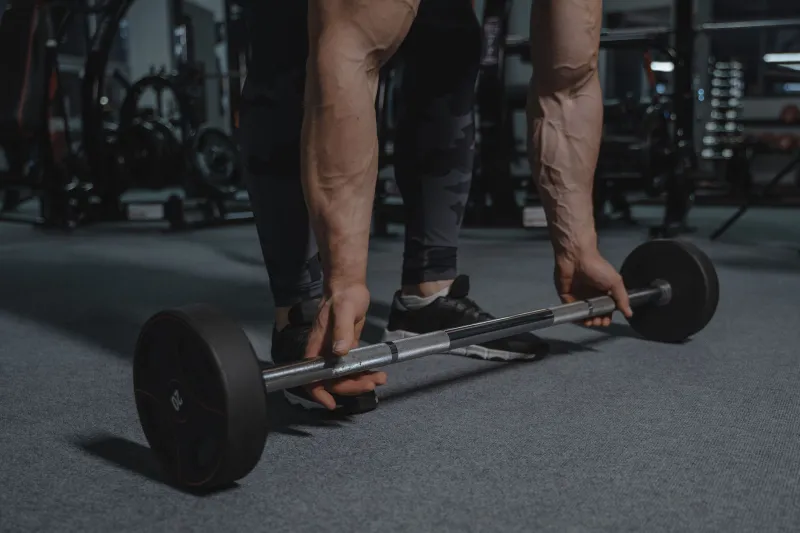
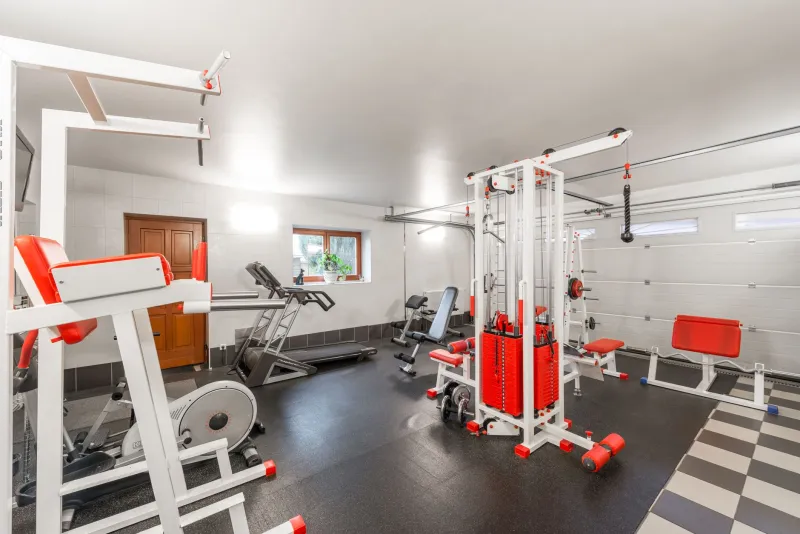
Scroll through your Instagram feed on any given Monday and you'll see it — guys doing cable lateral raises with perfect lighting, women hitting the adductor machine for the fourth set in a row, everyone looking busy, everyone looking pumped. What you won't see as much of? Barbells loaded heavy, squats hitting depth, deadlifts pulled from the floor with real weight.
There's a reason for that. Heavy compound lifts are hard. They're not photogenic. They make you sweat in unflattering ways. But here's the thing — they're also the reason the strongest, most jacked people in any serious gym look the way they do.
If your program is built primarily around isolation work and machine circuits, you're not just leaving gains on the table. You're probably sitting on them.
What Compound Movements Actually Do to Your Body
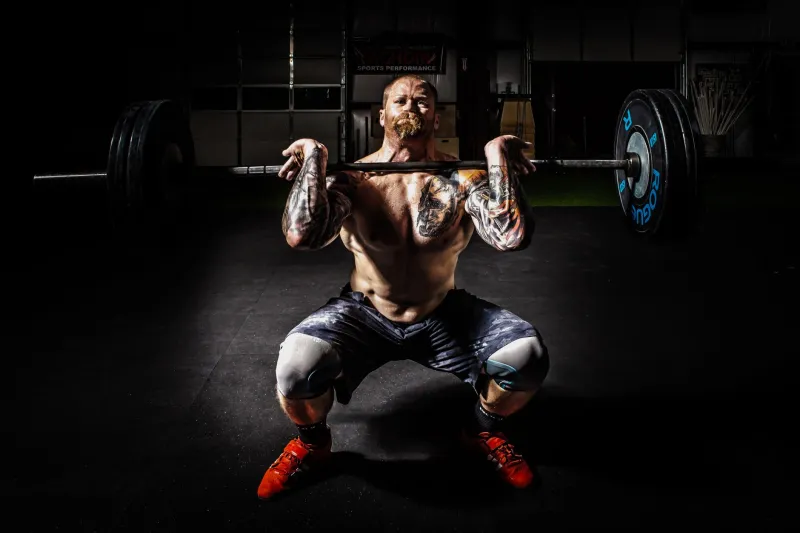
When you squat, deadlift, bench press, overhead press, or row, you're not just working a target muscle — you're triggering a systemic response. Multi-joint movements recruit multiple large muscle groups simultaneously, which means more total muscle fiber activation, greater hormonal output, and a higher metabolic demand than any single-joint exercise can match.
Research published in the Journal of Strength and Conditioning Research has consistently shown that compound exercises produce significantly greater acute testosterone and growth hormone responses compared to isolation movements. That hormonal environment is exactly what you need to build muscle across your entire body, not just the muscle you're targeting.
Compare that to a preacher curl or a leg extension. Yes, you'll get a pump. Yes, you'll feel the burn. But you're working a relatively small amount of muscle mass with limited systemic impact. The hormonal response is modest. The total stimulus is modest. And over time, your results will be modest too.
Real Lifters, Real Transformations
Take Marcus, a 34-year-old software engineer from Austin, Texas who spent two years grinding through machine-based workouts he'd built from YouTube videos. He was consistent, he was dedicated, and he was completely stuck. Same weight, same waist size, same frustration.
When he switched to a program centered on the squat, deadlift, bench, and barbell row — keeping isolation work to no more than 20% of his total volume — everything changed within six months. He added 18 pounds of lean mass and pulled his deadlift from 185 to 315. "I felt like I'd been training in a fog," he said. "The compound stuff was harder, but it actually worked."
Or consider Denise, a 41-year-old mother of two from Chicago who was convinced she couldn't do barbell work because of old knee issues. After working with a coach to modify her squat pattern and build up gradually, she found that the structural strength she developed from compound training actually reduced her knee pain — because the surrounding musculature finally had the strength to support the joint.
These aren't outliers. This is what happens when people stop treating the gym like a buffet of machines and start treating it like a place to get seriously strong.
When Isolation Work Actually Earns Its Place
Here's where we keep it balanced, because isolation exercises aren't the enemy — they're just wildly overused.
There are legitimate reasons to include targeted, single-joint work in your program. If you have a genuine muscle imbalance — say, a lagging rear delt that's affecting your shoulder health, or hamstrings that aren't keeping pace with your quad development — isolation work can help bring up that weak point in a way compound lifting can't always address efficiently.
Advanced bodybuilders who have already built a substantial base of strength and muscle mass also benefit from more isolation volume, because they need additional stimulus to push past plateaus that compound work alone won't crack.
And post-injury rehabilitation? Isolation movements are often exactly what's prescribed for a reason. They allow targeted loading of a specific structure without placing the kind of systemic demand on the body that might interfere with recovery.
The key question to ask yourself is this: Is this exercise solving a specific problem, or am I just doing it because I like how it feels? If you can't answer that clearly, it probably doesn't belong in your program — at least not at the expense of your compound work.
A Framework for Building Your Program the Right Way
Here's a simple structure that serious lifters use to keep their priorities straight:
70-80% of your volume should come from compound movements. Squats, deadlifts, Romanian deadlifts, bench press, incline press, overhead press, pull-ups, barbell rows, dips — these are your foundation. Load them progressively, track your numbers, and protect them like they're your most valuable asset, because they are.
20-30% can be isolation or accessory work. This is where you address weak points, add volume to lagging muscle groups, and yes, do the stuff that feels good. Curls, lateral raises, tricep pushdowns, face pulls — all fine, all useful, all in their proper place.
Sequence your training to reflect your priorities. Compound lifts go first, when your nervous system is fresh and you can handle maximum load. Isolation work comes at the end. Not the other way around.
Progress your compound lifts consistently. If your squat and deadlift numbers aren't going up over time, that's the problem to solve — not finding a new cable attachment to try.
Stop Optimizing the Wrong Thing
The fitness industry has gotten very good at making isolation work look sophisticated. There are YouTube channels dedicated entirely to the "perfect" lateral raise technique, Instagram accounts built around the optimal cable curl angle, and endless debates about which machine best isolates the long head of the bicep.
None of that matters much if you're not squatting heavy, pulling heavy, and pressing heavy on a regular basis.
Brawny Jim's isn't about what looks good on camera. It's about what builds real, lasting size and strength. And that starts with respecting the lifts that have been building serious physiques since long before anyone had a ring light.
Load the bar. Hit the big movements. Then worry about the rest.