Looking Jacked on Camera While Your Knees File a Complaint: The Real Cost of Training for the 'Gram
Let's be straight with each other for a second. You've seen the clips. Some guy at the gym loading up a bar that's clearly two plates past his actual capacity, descending about six inches on a squat, grinding through a deadlift that looks more like a cat arching its back than a hip hinge, and then posting it with a caption about "beast mode." Maybe you've been that guy. No judgment here — gym culture and social media have basically merged into one giant performance incentive, and it's messing with how a lot of serious lifters train.
The problem isn't lifting heavy. Heavy lifting is the whole point. The problem is when the look of lifting heavy becomes more important than the act of it. And that subtle shift — from training your body to performing for an audience — is one of the most reliable roads to a shoulder that clicks every morning and a lower back that reminds you of its existence every time you bend down to tie your shoes.
Why Gym Culture Rewards the Wrong Stuff
Here's the uncomfortable reality: a crisp, controlled 225-pound squat to depth looks less impressive on video than a sloppy, butt-wink-loaded 315 that barely breaks parallel. The algorithm doesn't care about your posterior chain development. It cares about the big number on the bar and the grunt at the top.
That creates a feedback loop. You post the heavy clip, you get the likes, your training brain starts associating max-effort ego lifts with social validation. Over time, that association starts bleeding into your actual programming. You're not consciously thinking "I'm going to sacrifice my form for clout" — it happens gradually. You start loading just a little more than you should. You rush the setup. You skip the pause at the bottom because it doesn't look as explosive. The reps start shortening. The ego is running the program now, and your joints are just along for the ride.
The Exercises That Punish Ego Lifting the Hardest
Not every movement punishes bad form equally. Some exercises are relatively forgiving when technique slips. Others will absolutely collect their debt with interest.
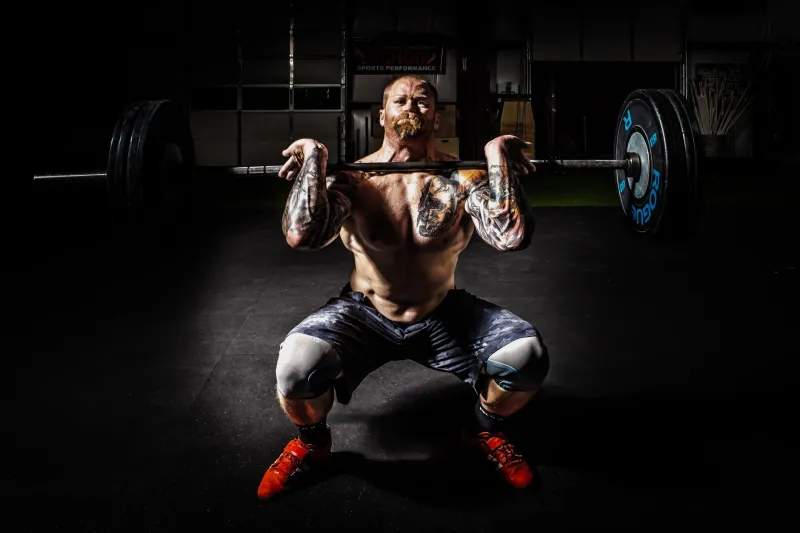
The squat is probably the most abused lift in the ego-lifting playbook. Cutting depth to load more weight shifts stress away from the quads and glutes — the muscles you're actually trying to develop — and dumps it directly onto the knee joint and lower spine. Do that long enough and you're not building a stronger squat, you're building a more efficient path to a meniscus issue.
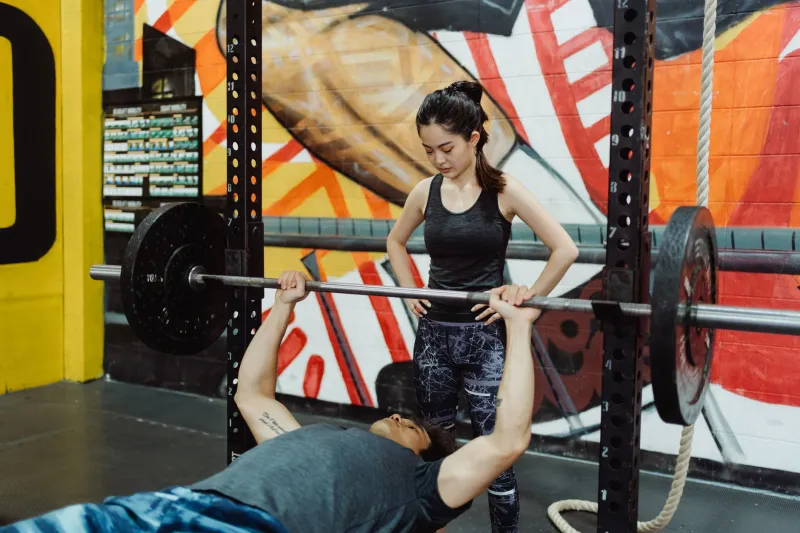
The bench press is another one. When you're chasing a number that's too heavy, the first thing to go is scapular control. The shoulder blades start winging, the bar path gets inconsistent, and the anterior shoulder takes on load it was never designed to handle at that angle. Rotator cuff injuries from bench press are so common they're practically a rite of passage in powerlifting circles — and most of them are entirely preventable.
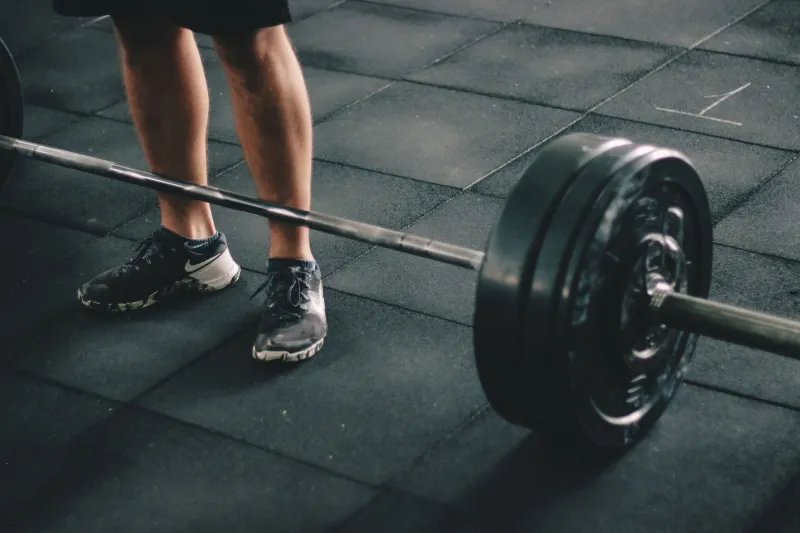
The deadlift might carry the highest stakes of all. A rounded lower back under a heavy load is one of the fastest ways to end up with a herniated disc, and yet it's also one of the most common things you'll see in ego-lift videos. The telltale signs — hips shooting up before the bar leaves the floor, lumbar flexion mid-pull, the bar drifting away from the legs — are almost invisible on a quick video clip but they're absolutely visible on an MRI six months later.
Overhead pressing rounds out the list. Excessive lumbar extension to grind out a press that's too heavy turns a shoulder exercise into a lower back stress test. It also tends to compromise the rotator cuff by altering the mechanics at the top of the movement.
How to Tell the Difference Between Heavy and Reckless
This is where it gets nuanced, because legitimate heavy lifting and ego lifting can look similar from the outside. Both involve grinding reps. Both involve some technical breakdown under near-maximal loads. The difference is intent, control, and frequency.
A few questions worth asking yourself honestly:
Could you do that rep again? A hard but legitimate heavy single usually feels like you could replicate it with similar mechanics. An ego lift often feels like you barely survived it and couldn't safely reproduce it.
Where did you feel it? Muscle fatigue is the goal. Joint stress is a warning. If your elbows, knees, or lower back are the primary things talking to you after a set, that's not "intensity" — that's your body telling you the load exceeded your structural capacity at your current technique level.
Would you be comfortable watching your own form back? This one's useful because it bypasses the in-the-moment adrenaline. If you'd cringe watching a replay of your own reps, that's information worth acting on.
Is the weight serving the movement, or is the movement serving the weight? Legitimate progressive overload means the exercise is still doing what it's supposed to do — just with more resistance. Ego lifting means the exercise has been quietly redesigned to accommodate a number that your actual strength doesn't support yet.
Training Heavy the Right Way Still Exists
None of this is an argument for going light forever or treating every set like a technique clinic. Heavy lifting is genuinely important for building strength, and there's a version of grinding through hard reps that's completely legitimate and necessary for progress.
The framework that actually works long-term looks something like this: build volume and technique at submaximal loads until the movement pattern is bulletproof, then push intensity within that pattern. When you add weight, the technique should be leading the load — not the other way around. Max effort days have a place in any serious program, but they're earned through accumulated competence, not borrowed from a future version of yourself that hasn't gotten injured yet.
Your joints have a finite number of bad reps in them. Every ego lift you do is spending from that account. The lifters who are still training hard at 45 aren't the ones who posted the most impressive clips at 25 — they're the ones who were disciplined enough to keep the camera out of the decision-making process.
Train like you want to be doing this in ten years. Because you do.