Your Hands Are Quitting Before Your Back Even Warms Up — Here's Why
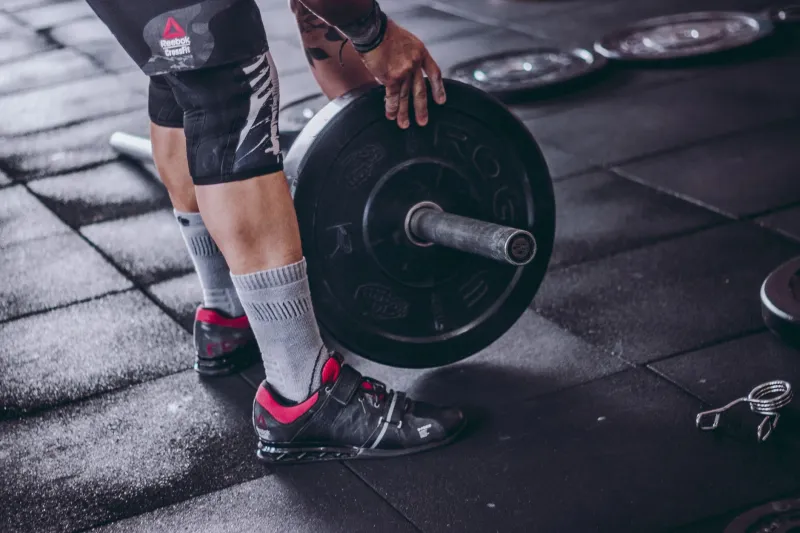
You're three sets into barbell rows, the weight feels manageable, your lats are barely screaming — and then your hands just... let go. Sound familiar? It's one of the most frustrating bottlenecks in back training, and it's way more common than people admit at the gym.
Here's the thing: your back is almost certainly stronger than your grip. The muscles that make up your posterior chain — lats, rhomboids, traps, rear delts — are massive, powerful structures designed to move serious load. Your forearm flexors, by comparison, are relatively small and fatigue fast. So when you're grinding through heavy cable rows or barbell work, your grip becomes the weakest link in a very strong chain.
But just accepting that and slapping on wrist straps every session isn't the move — at least not long-term. Let's dig into why this happens and what you can actually do about it.
The Neurology Behind the Early Tap-Out
Your nervous system is constantly running a threat assessment during heavy lifts. When grip integrity starts to degrade, your brain reads that as a signal that the load is unsafe — and it starts dialing back motor unit recruitment in the muscles further up the chain. In plain English: your CNS starts shutting down the party before your back muscles have hit their limit.
This is sometimes called irradiation failure — the idea that a weak link in the kinetic chain disrupts the neural drive flowing to stronger muscles. Grip isn't just a mechanical issue; it's a neurological governor. Strengthen the grip, and you essentially give your nervous system permission to recruit more muscle tissue throughout the pull.
Researchers at places like the University of Iowa have studied how grip fatigue affects total-body force production, and the findings consistently show that grip exhaustion reduces pulling power even when the prime movers have plenty left in the tank. Your hands are literally holding your back gains hostage.
The Compound Pulling Problem
Rows — whether you're doing bent-over barbell rows, seated cable rows, chest-supported machine rows, or dumbbell rows — require sustained isometric grip effort for the entire set. Unlike a deadlift where you can reset between reps, rowing movements demand that your hands maintain tension through both the concentric pull and the eccentric lowering phase, rep after rep.
Add to that the fact that most gym-goers don't train grip in isolation, and you've got a recipe for a perpetual bottleneck. You're essentially trying to build a bigger engine while running on worn-out tires.
How to Fix It Without Living in Straps
Straps have their place — particularly on max-effort sets or when you're trying to flush out the back at the end of a session. But if you're reaching for them on your warm-up sets, you've got a grip problem that needs direct attention.
1. Add Dedicated Grip Work at the End of Back Sessions
The simplest fix is to treat grip like any other muscle group that needs progressive overload. After your main back work, tack on two or three grip-specific movements:
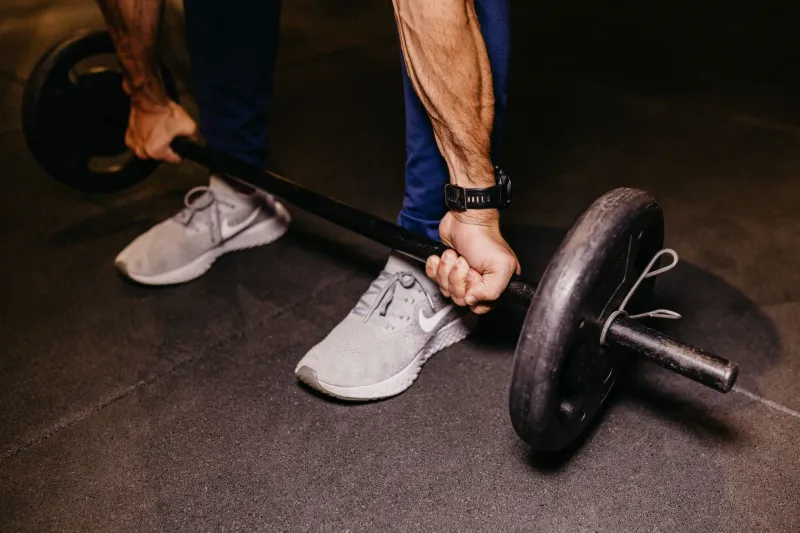
- Barbell holds: Load a bar to about 80% of your deadlift weight and just hold it for 30–45 second intervals. No movement, just isometric crushing. Three rounds of this twice a week will build grip endurance fast.
- Fat bar or Fat Gripz work: Thicker implements force your hands to work harder, accelerating grip adaptation. Even just using Fat Gripz on your cable row handle one day a week creates a significant training stimulus.
- Farmer's carries: Walk 40–50 feet with heavy dumbbells or trap bar. These build grip endurance, forearm hypertrophy, and core stability simultaneously. Efficiency at its best.
2. Rotate Your Row Grip Styles
Different grip orientations stress the forearm muscles differently. Pronated (overhand) grips hit the wrist extensors harder. Neutral grips shift more load to the flexors. Supinated (underhand) grips actually allow for a stronger mechanical grip position.
Cycling through these variations across your weekly training doesn't just prevent overuse issues — it builds grip strength from multiple angles, filling in the weak spots that a single grip style leaves behind.
3. Train the Eccentric Grip
Most people lose their grip on the lowering phase of rows, not the pull. That's because eccentric strength in the forearms is often undertrained. One underrated fix: do your last set of dumbbell rows with a controlled 3–4 second lowering phase, focusing specifically on maintaining grip tension as the weight descends. This trains the exact position where failure happens.
4. Chalk First, Straps Second
Before you reach for straps, try chalk. It's legal in most gyms (check first), cheap, and it eliminates the moisture-induced slippage that accounts for a huge portion of grip failures. A lot of guys who think they have a grip strength problem actually just have a grip friction problem. Chalk fixes the latter without masking the former.
Build a Grip-Specific Microcycle
If you're serious about closing the gap, here's a simple two-week rotation you can plug into your existing training:
Week 1 — Endurance Focus: Barbell holds (3x30 sec), plate pinches (3x20 sec each hand), Fat Gripz cable rows (3x12)
Week 2 — Strength Focus: Heavy farmer's carries (4x40 feet), thick-handle dumbbell holds (3x20 sec), eccentric dumbbell rows with 4-second negative (3x8)
Repeat the cycle and increase load or duration every two weeks. Within 6–8 weeks, most guys notice a meaningful improvement in how long their grip holds up during back sessions.
The Takeaway
Grip strength isn't just a forearm issue — it's a performance ceiling that's capping your entire back development. When your hands give out early, your lats, rhomboids, and traps never get the full training stimulus they need to grow. Fix the grip, and you fix the whole pull.
Straps are a tool, not a crutch. Use them strategically on your heaviest sets if needed, but don't skip the grip work that'll eventually make them optional. Your back will thank you — and so will your numbers.