Stop Chasing the Mirror: 3 Performance Benchmarks That Actually Prove You're Getting Stronger
The Pump Is a Liar
Let's be straight with each other for a second. You've seen it — maybe you've even done it. Guy walks out of a 45-minute chest session, hits the locker room mirror, flexes, snaps a pic, and slaps a motivational caption on it. "No days off. Built different." Cool. But ask that same guy to deadlift twice his bodyweight or bang out a set of weighted pull-ups, and suddenly things get a lot quieter.
There's nothing wrong with wanting to look good. That's part of why most of us started lifting in the first place. But somewhere along the way, the fitness world got seduced by the idea that looking muscular and being strong are the same thing. They're not. Not even close.
Aesthetics are a byproduct of serious training. Performance is the proof. And if you're only tracking one without the other, you've got a blind spot big enough to drive a truck through.
Why Vanity Metrics Feel Good but Tell You Nothing
Instagram pumps, before-and-after photos, the way your shirt fits on a good day — these things are satisfying, sure. But they're also wildly inconsistent. Water retention, lighting, meal timing, how much sleep you got — all of it can shift your appearance by what looks like 10 pounds in either direction on any given day.
Performance benchmarks don't care about any of that. They're cold, honest, and objective. Either you hit the number or you didn't. Either you moved the weight or it moved you.
That's exactly why serious lifters need to build their training identity around measurable performance standards — not just how they look standing next to a rack with a good pump.
Here are three benchmarks worth actually tracking.
Benchmark 1: The Deadlift Strength Ratio
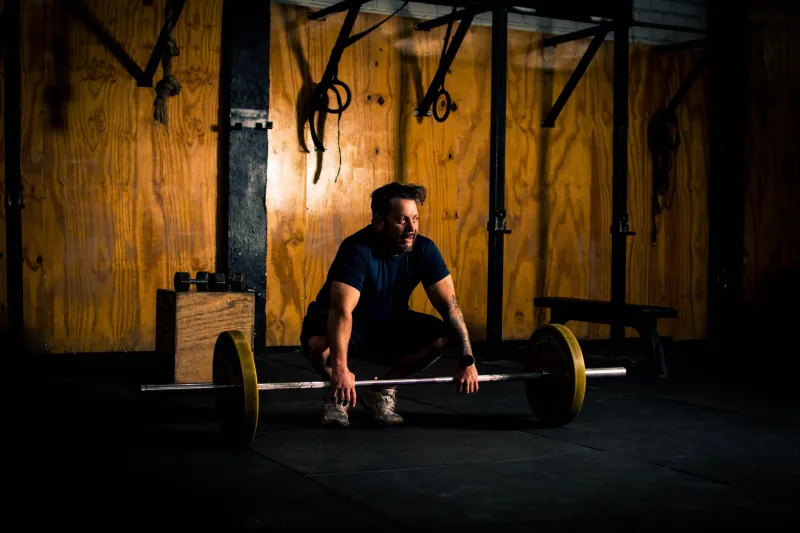
If there's one lift that cuts through the noise, it's the deadlift. It's a full-body test of raw strength — hips, hamstrings, back, grip — and it doesn't reward people who just look the part. The barbell doesn't care how lean you are.
A commonly accepted standard for intermediate male lifters is pulling 2x bodyweight for a clean single. For women, 1.5x bodyweight is a solid marker at the intermediate level. These aren't elite powerlifting numbers — they're the baseline that separates people who train seriously from people who go through the motions.
If you've been lifting consistently for two or more years and can't hit these numbers, something in your programming or effort level needs to be examined. Aesthetics won't tell you that. The deadlift will.
Start tracking your one-rep max or a solid triple and run the ratio against your bodyweight every 8–12 weeks. Progress here means something real.
Benchmark 2: Relative Upper Body Pulling Strength
Pull-ups are the great equalizer. You can fake a lot of things in a gym, but you can't fake pulling your bodyweight over a bar with strict form for multiple reps.
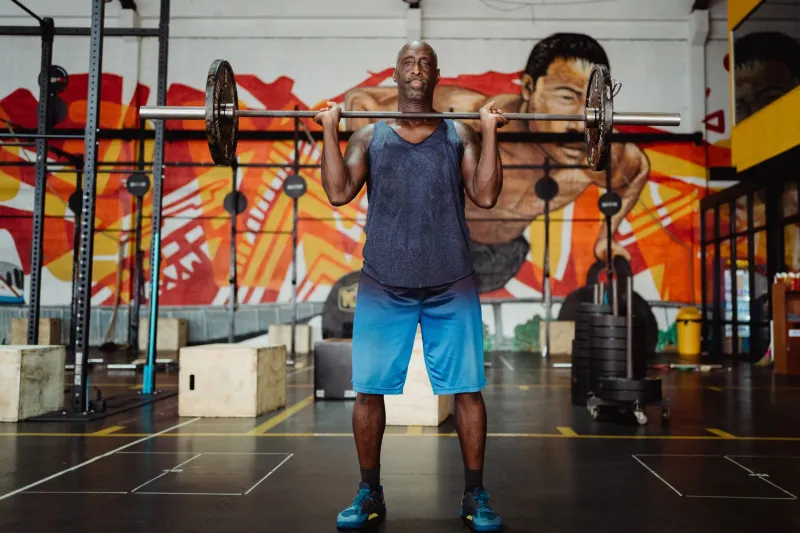
The standard worth chasing: 10 clean, dead-hang pull-ups at your training bodyweight. No kipping, no partial reps, no cheating the chin over with a neck cramp. Full extension at the bottom, chin clearly over the bar at the top.
Once you're there, start adding weight. A 45-pound plate hanging from a belt for 5 reps is a benchmark that genuinely separates strong lifters from gym regulars. It also tells you something important about the balance between your upper body pulling and pushing strength — an imbalance that's responsible for more shoulder problems than most lifters want to admit.
Track your pull-up volume and load progression the same way you track your bench press. Most guys don't. Most guys also wonder why their shoulders hurt.
Benchmark 3: The Conditioning Floor
Strength without conditioning is just being heavy. This one stings a little, but it needs to be said.
You don't have to be a marathon runner. Nobody at Brawny Jim's is asking you to jog. But if you can't complete a moderate conditioning test without tapping out, that's information worth having.
A simple benchmark: the 400-meter sprint test. Run a quarter mile — one lap around a standard track — and see where you land. Under 90 seconds is a reasonable floor for most strength athletes. Under 75 seconds puts you in solid conditioning territory without sacrificing your identity as a lifter.
Another option: a 10-minute AMRAP of 10 calories on the assault bike, 10 kettlebell swings at a challenging weight, and 10 box jumps. If you're gassing out after two rounds, your conditioning is holding your overall athleticism hostage, no matter how good your arms look.
Conditioning benchmarks also give you something useful to chase during phases where strength gains slow down — which they always do eventually.
How to Actually Use These Numbers
Don't throw all three at yourself in the same week and spiral into a crisis. Pick one, test it honestly, and record the number. Set a 12-week goal. Program toward it. Retest.
The point isn't to feel bad about where you are. The point is to have real data on your fitness instead of relying on how you look in a bathroom selfie at 7 a.m. after a good night's sleep.
Look, nobody's saying stop caring about how you look. Train hard enough and consistently enough, and the aesthetics will take care of themselves. But if you want a training identity that actually holds up — one that means something beyond a good angle and decent lighting — you need performance benchmarks to keep you honest.
The mirror will always show you what you want to see. The barbell will always show you the truth.
Train accordingly.