Playing to the Crowd Is Quietly Stealing Years From Your Gainz
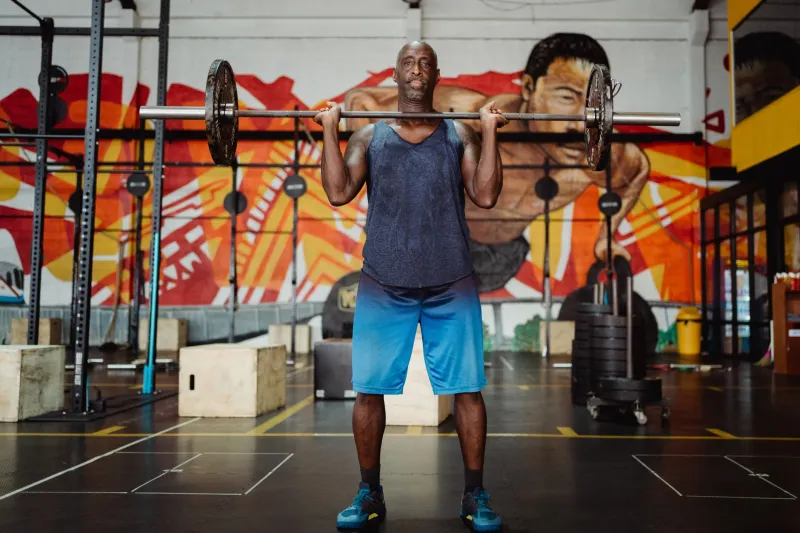
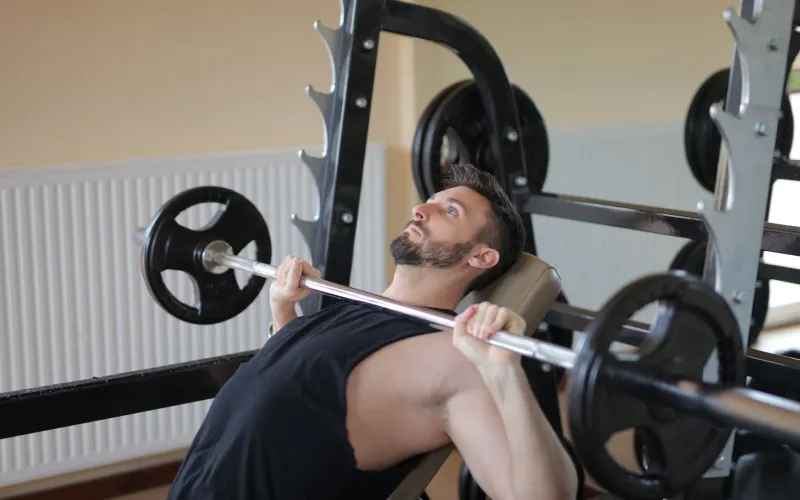
Let's set the scene. You walk into the gym on a Tuesday evening, it's packed, and someone you vaguely recognize from the squat rack last week is warming up two stations down. You had a 315-pound back squat on the program today — a clean, controlled, textbook set. But now? Now you're sliding a couple of extra plates on because something in your brain just shifted gears.
That something has a name. And it's costing you more than you think.
The Performance Loop Nobody Talks About
There's a well-documented psychological phenomenon called social facilitation — the idea that people perform differently when others are watching. In some contexts, like simple or well-rehearsed tasks, an audience can actually boost output. But in complex, technique-heavy activities — like compound lifting — the presence of observers tends to do the opposite. It cranks up anxiety, disrupts motor patterns, and pushes athletes toward decisions that prioritize appearance over execution.
In plain English: you start training for the audience instead of the adaptation.
The gym amplifies this in ways that most fitness content completely ignores. It's not just about loading too heavy (though that's part of it). It's about the entire psychological posture you bring into a session when your ego is running point. You rush your warm-up sets because they look too light. You cut depth on squats because the full range of motion feels awkward with people around. You skip accessory work because nobody's impressed watching you do Nordic curls.
Each individual decision seems small. Strung together over months and years, they hollow out your program from the inside.
The Gap Between Your Gym Persona and Your Actual Strength
Most guys who've been lifting for a few years have developed what you might call a gym identity — a version of themselves that exists specifically inside those four walls. The gym identity lifts certain weights, avoids certain exercises, and maintains a certain image. It's not entirely conscious, but it's very real.
The problem is that your gym identity and your actual strength development are often working in direct opposition to each other.
Your gym identity doesn't want to be seen doing goblet squats with a 35-pound dumbbell, even if that's exactly what your hip mobility needs right now. It doesn't want to drop 20 pounds off the bench to fix the bar path issue your shoulder has been complaining about for six months. It definitely doesn't want to spend three weeks at 70 percent intensity doing volume work, because volume work doesn't look impressive mid-set.
So instead, you keep loading the bar past what your technique can actually support. You keep grinding out reps that look like a controlled disaster. And your body keeps not adapting the way you want it to, because real adaptation requires precision, not performance.
What Internal Training Actually Looks Like
Shifting from external to internal metrics isn't about becoming a monk who doesn't care about progress. It's about redefining what progress actually means during a session.
Here's a simple framework that works:
Rate the quality, not just the quantity. After every working set, ask yourself two questions before you touch another plate: Did that move the way I intended it to? And did it feel like the right stimulus for today? If the answer to either is no, the weight is wrong — regardless of what it looks like to anyone else in the building.
Use a training log like you actually mean it. Not to track PRs for bragging rights, but to track trends. Are your technique notes improving week over week? Is your RPE (rate of perceived exertion) staying consistent at the same weights, which signals genuine adaptation? These are the numbers that tell the real story.
Treat ego checks as diagnostic tools. When you catch yourself making a decision based on how it looks rather than how it trains, that's data. It tells you exactly where your program needs shoring up. The exercises you avoid because they feel embarrassing are almost always the exercises you need most.
Build a "nobody's watching" training block. Seriously — schedule four to six weeks where the entire goal is technical refinement at submaximal loads. Drop intensity, increase focus, and measure success purely on movement quality. Most guys who do this come out the other side moving better, feeling better, and — here's the kicker — lifting more than they were before.
The Five-Year Math
Here's where it gets uncomfortable. If you've been training for any significant length of time and you're honest with yourself, you can probably identify a pattern: big pushes on the bar, plateaus, minor injuries or nagging pain, resets, repeat. That cycle isn't bad luck. It's the ego lift feedback loop running on schedule.
A lifter who trains consistently at appropriate intensities with solid technique and progressive overload built on real baselines will outpace a lifter chasing gym-floor validation almost every single time — not in a month, but over a two-to-five-year window. The compounding effect of training that actually sticks versus training that looks good but breaks down is enormous.
Five years of smart, internally-driven training produces a different human being than five years of performing for the room. One of those humans is jacked, durable, and still making progress in their late 30s. The other one has a collection of old injuries, a handful of impressive-sounding numbers that haven't moved in two years, and a gym identity that's gotten harder and harder to maintain.
The Hardest Rep You'll Ever Do
There's nothing wrong with wanting to look strong. There's nothing wrong with caring about your numbers or feeling a rush when you hit a new PR. That's part of why this sport is addictive in the best possible way.
But there's a version of that drive that builds you, and a version that just performs building you. Learning to tell the difference — in the moment, when the plates are loaded and someone's watching — is one of the most underrated skills in the gym.
The lifters who figure this out early don't just get stronger faster. They stay in the game longer, stay healthier, and eventually become the people in the gym worth watching — not because they're chasing attention, but because they've built something real.
Train for that guy. Not the one standing next to you.