When Your Grip Gives Out First: The Hidden Ceiling on Your Pulling Strength
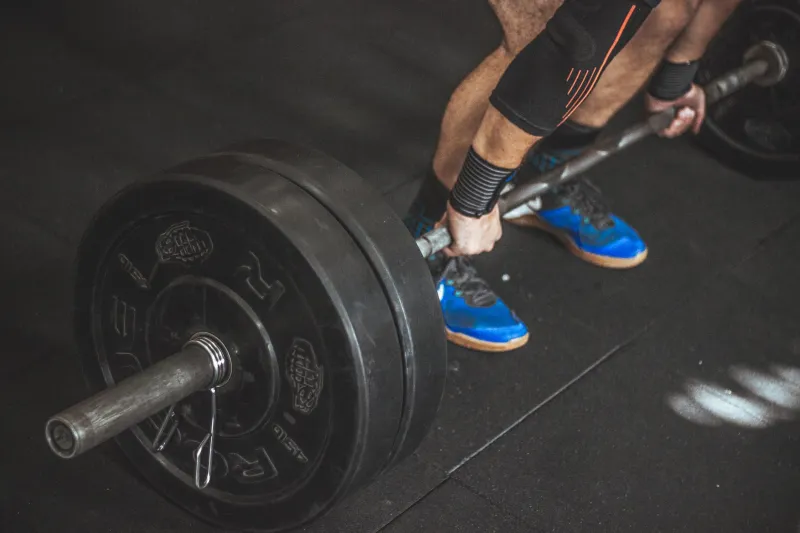
You've been pulling the same weight off the floor for three months. You've tweaked your stance, filmed your setup, maybe even hired a coach to watch your hips. And yet the bar just sits there at the top of your old PR, mocking you like a coworker who knows your Wi-Fi password.
Here's a question most lifters never ask: what if the problem isn't your posterior chain at all? What if your back, glutes, and hamstrings are fully ready to move more weight — and the only thing stopping them is twelve inches of forearm that quietly waves the white flag before the real work even starts?
Grip strength is the silent governor on your pulling power. It doesn't announce itself dramatically. It just slowly, quietly caps everything above it.
Why Grip Is the Bottleneck Nobody Talks About
The deadlift, the row, the pull-up, the farmer carry — every pulling movement in your arsenal flows through your hands before it reaches anything else. Your lats can fire hard, your glutes can generate serious force, but if the connection between the bar and your nervous system is shaky, none of that power transfers cleanly.
Grip fatigue is sneaky because it rarely fails all at once. Instead, it degrades your mechanics gradually. Your wrists rotate slightly. Your shoulders drift forward to compensate. Your brace loosens. By the time the bar slips or you rerack early, you've already been lifting suboptimally for the last several reps — and you didn't even notice.
Research in strength and conditioning consistently shows that grip endurance tends to decline faster than the primary movers during high-volume pulling sessions. Translation: your back might have three more reps in it, but your hands already punched out. You're leaving gains on the table every single session.
How to Actually Test Whether Grip Is Your Weak Link
Before you start hammering forearm curls, figure out whether grip is genuinely your ceiling. Here are three practical tests you can run in any gym.
The Double Overhand Audit Strip down to your working weight and pull exclusively with a double overhand grip — no mixed grip, no straps. If you can't maintain a clean double overhand lockout for sets of five at a weight you normally handle comfortably with a mixed grip, grip is a limiting factor. The gap between your mixed-grip capacity and your double-overhand capacity is your grip deficit.
The Hang Test Find a pull-up bar and hang dead. No kipping, no movement, just hang. A reasonable baseline for someone who deadlifts seriously is two minutes. If you're struggling to hit ninety seconds, your grip endurance isn't keeping up with your strength ambitions. Under sixty seconds is a red flag.
The Fatigue Mapping Method Pay attention to where fatigue shows up first during your next pulling session. If your forearms are burning before your target muscles hit genuine failure, that's your answer. Grip is the weak link. If your back and hamstrings are toasted but your hands feel fine, you've got a different problem to solve.
The Eight-Week Grip Progression That Actually Compounds
Here's the thing about grip training — most guys either ignore it entirely or throw in some random wrist curls at the end of a session and call it done. Neither approach moves the needle. What actually works is progressive overload applied systematically, the same principle that drives every other strength adaptation in your body.
Weeks 1–2: Foundation Phase Add three sets of dead hangs (to failure, rest two minutes between sets) at the end of every pulling day. Keep a log of your hang times. Also introduce farmer carries: grab dumbbells at roughly 50% of your bodyweight in each hand and walk for thirty seconds. Three rounds. The goal here is building baseline endurance, not max strength.
Weeks 3–4: Grip Specificity Switch one working set per deadlift session to a double overhand grip, even if that means dropping weight temporarily. This is deliberate practice under load. Add plate pinches — grab a 45-pound plate between your thumb and fingers and hold for thirty seconds per hand. Three sets each side. This hits the thumb abductors, which most grip work completely neglects.
Weeks 5–6: Load Progression Increase farmer carry weight by 10–15 pounds. Extend your hang sets by aiming for small personal records each session. Introduce thick bar or towel pull-ups if your gym has them — wrapping a gym towel around a pull-up bar and pulling from that significantly increases the demand on your fingers and wrists.
Weeks 7–8: Integration By now, your double overhand capacity should be noticeably closer to your mixed-grip numbers. Attempt your previous PR with double overhand. Re-run the hang test and compare your times to Week 1. Most lifters see 20–40% improvement in hang duration and a meaningful bump in their double overhand working weight over this stretch.
The Straps Conversation
Straps aren't the enemy. They're a tool, and like any tool, the problem is when people use them as a substitute for developing the underlying capacity rather than a supplement to it.
Using straps on your heaviest sets to protect your training stimulus while you build grip strength in parallel? Smart. Using straps on every single set of every pulling movement for years without ever developing your grip? That's how you end up with a 500-pound deadlift and forearms that can't hold a grocery bag.
The goal is to make straps optional, not forbidden. When your raw grip can handle your working weights comfortably, strapping in for max effort attempts or high-volume accessory work is just good training hygiene.
One More Thing
Grip strength has a nasty habit of exposing itself at the worst possible moment — during a PR attempt, at the end of a heavy set, when it actually counts. The lifters who treat it as a primary training variable rather than an afterthought consistently report that their pulling numbers respond once they close the gap.
Your back is probably ready for more. Your grip just needs to catch up.